Wedding preparations in Morocco are often a hectic time. Between choosing the venue, the caterer, traditional attire, and managing invitations, the bride and groom are often pressed for time. Yet, amidst this wonderful flurry of activity, there is an essential administrative and medical step, sometimes perceived as a mere formality: obtaining the prenuptial medical certificate.
While Moroccan law requires this document to finalize the marriage (the Adoul cannot draw up the certificate without it), the accompanying medical examination should go far beyond a simple routine check-up. Conducting a A complete premarital blood test<2> is actually the first act of protection and love that a couple offers each other.
But what is the real purpose of this assessment? What biological tests are recommended by Moroccan doctors? And how can you best prepare for it to avoid unnecessary stress as the big day approaches? This comprehensive guide explains everything you need to know to approach this step with peace of mind.
1. The legal framework of the prenuptial certificate in Morocco
Before going into the medical details, it is important to understand the legal framework. In Morocco, the Family Code (the Moudawana) stipulates in Article 65 that the marriage file must include a medical certificate for each of the future spouses.
The aim of the law is not to prevent marriage in the event of health problems, but to ensure a Total transparency between future spouses. The general practitioner or specialist who sees you has the mission of ensuring that no contagious or serious illness is unknown to either partner.
However, many couples are satisfied with a quick clinical examination (blood pressure check, heartbeat listening) to obtain the necessary document. Yet, many conditions, particularly infectious or genetic ones, are completely asymptomatic. This is where the crucial role of the medical testing laboratory comes in. The doctor often prescribes a comprehensive blood test to be able to sign the certificate with full knowledge of the facts, and above all, to inform you about your overall health.
2. Why have a blood test before marriage? (The real benefit)
The premarital assessment is not a judgment, but a remarkably effective preventative tool. It pursues three major objectives for your future family life:
A. Protecting your partner’s health
Some infectious diseases, such as hepatitis or sexually transmitted infections (STIs), can remain asymptomatic for years. A person can carry them without ever suspecting it and transmit them to their partner during intimate contact. Testing allows for prompt medical treatment and enables the implementation of effective protective measures for the partner.
B. Protecting the health of future children
This is often the argument that resonates most with couples planning to marry. Blood type incompatibility (the infamous Rh factor) or the transmission of hereditary genetic diseases can have serious consequences for a future pregnancy or the baby’s health. Premarital screening allows these risks to be anticipated. If a risk is identified, simple medical solutions exist today to ensure perfectly normal pregnancies.
C. Taking stock of one’s own health (The comprehensive check-up)
Marriage often marks the beginning of a new, responsible adult life. It’s the perfect opportunity to take stock of your health: to check for hidden anemia (very common among Moroccan women), the onset of diabetes, or a lipid imbalance. A healthy body is the best starting point for this new adventure together.
3. Recommended medical tests: What exactly are we looking for?
When you go to the lab with your prescription, the biologist will perform a series of targeted tests. Here are the most common tests and their purpose.
Blood Grouping and the Rh Factor (Essential)
This is the key analysis in the prenuptial assessment. It involves determining your blood type (A, B, AB or O) and your Rh factor (Positive or Negative).
Why is this important? The focus is primarily on the woman. If the expectant mother is Rh-negative (Rh-) and the expectant father is Rh-positive (Rh+), there is a risk of blood incompatibility if the unborn baby inherits the father’s Rh-positive blood type. During childbirth (or a miscarriage), the baby’s blood can come into contact with the mother’s blood, which will then cause her to develop antibodies against the red blood cells of her future children.
The solution: Thanks to this prior screening, the gynecologist will plan a simple injection (anti-D immunoglobulins) during pregnancy or after childbirth to neutralize this risk.
Screening for Infectious Diseases (Serology)
This aspect is essential to protect the couple and the unborn child (because several of these viruses cross the placenta).
- Syphilis (TPHA/VDRL Test): A bacterial disease that has seen a resurgence in recent years. Easily treatable with antibiotics if detected early, it can cause serious neurological damage if ignored, and lead to miscarriages.
- HIV (AIDS): Early detection now allows, thanks to modern triple therapies, to live normally, to protect one’s partner from transmission and to have HIV-negative children.
- Hepatitis B and C: These viruses silently attack the liver. Hepatitis B is extremely contagious sexually. If one partner is a carrier, the other can be vaccinated to be fully protected before marriage.
- Rubella and Toxoplasmosis (For the woman): It is crucial to know if the bride-to-be is immune to these diseases. If she contracts rubella or toxoplasmosis during a future pregnancy, the consequences for fetal development can be very serious (birth defects). If the test shows that she is not immune to rubella, she will have time to get vaccinated before becoming pregnant.
General Health Status Assessment
A good doctor will take advantage of this assessment to check your basal metabolic rate:
- Complete Blood Count (CBC): To detect possible anemia (iron deficiency, very common), an ongoing infection, or a clotting problem.
- Fasting blood glucose: Diabetes screening. In Morocco, changing dietary habits have led to a surge in type 2 diabetes cases, often diagnosed very late.
- Lipid Profile (Cholesterol and Triglycerides): Especially if you have a family history of cardiovascular disease.
Genetic Diseases (Depending on family history)
In some regions of Morocco, or in cases of consanguineous marriage (between cousins, although this is becoming less common), a doctor may order a test for hemoglobinopathies. These are genetic blood disorders such as sickle cell anemia or thalassemia. If both parents are carriers of the gene, the child has a high risk of developing the severe form of the disease.
4. How to best prepare for your lab test?
Conducting a prenuptial assessment does not require any special effort, but a few simple rules can guarantee the accuracy of the results.
Do you need to be fasting?
Yes, in the vast majority of cases. If your prescription includes blood glucose (sugar) or lipid (cholesterol) testing, a strict fast of 8 to 12 hours is mandatory.
- Practical advice: Have a light dinner the night before, around 8 or 9 pm, and go to the lab first thing the next morning. You are allowed to drink plain water in the morning, but coffee, tea, and obviously breakfast are forbidden before the blood test.
When should I have my premarital check-up?
Ideally, you shouldn’t wait until the last minute! Wedding preparations already generate enough stress.
- The right timing: Plan to have your tests done at least 2 to 3 months before the date of signing the medical certificate (the Drib Sda9). Why? If one of the tests reveals an abnormality (such as a significant iron deficiency or the need for a rubella or hepatitis B vaccination), you will have plenty of time to calmly complete the treatment or vaccination protocol before the big day.
Should I go alone or as a couple?
This is an excellent opportunity to experience this stage together. Going to the lab together is a supportive step. It allows you to support each other (especially if one of you is a little apprehensive about needles!) and to address the issue of marital health in a spirit of teamwork and transparency.
5. Breaking Taboos: Communication within the Couple
Receiving test results can sometimes be a source of anxiety. What happens if a result is positive for an STI or if an abnormality is detected?
This is where the love and maturity of the couple truly come into their own. Medical confidentiality is absolute: the laboratory delivers the results directly to each individual (or via a secure online portal). It is then up to you to discuss them with the prescribing physician, and subsequently with your future partner.
No illness is inevitable today. Modern medicine allows us to overcome or treat almost all obstacles. Approaching these topics with kindness and without judgment significantly strengthens the bond between a future couple. Honesty about health matters is the foundation of a strong home.
6. The role of your local laboratory
With the busy schedules of engaged couples, traveling across town for a blood test can be complicated. Therefore, choosing the right laboratory is important.
Choose a facility that is an integral part of your daily life, known for its reliability, and equipped with modern technology. Many residents of Casablanca’s central hub, from Derb Sultan to the Hospital District, opt for long-established institutions that combine medical expertise with convenient services.
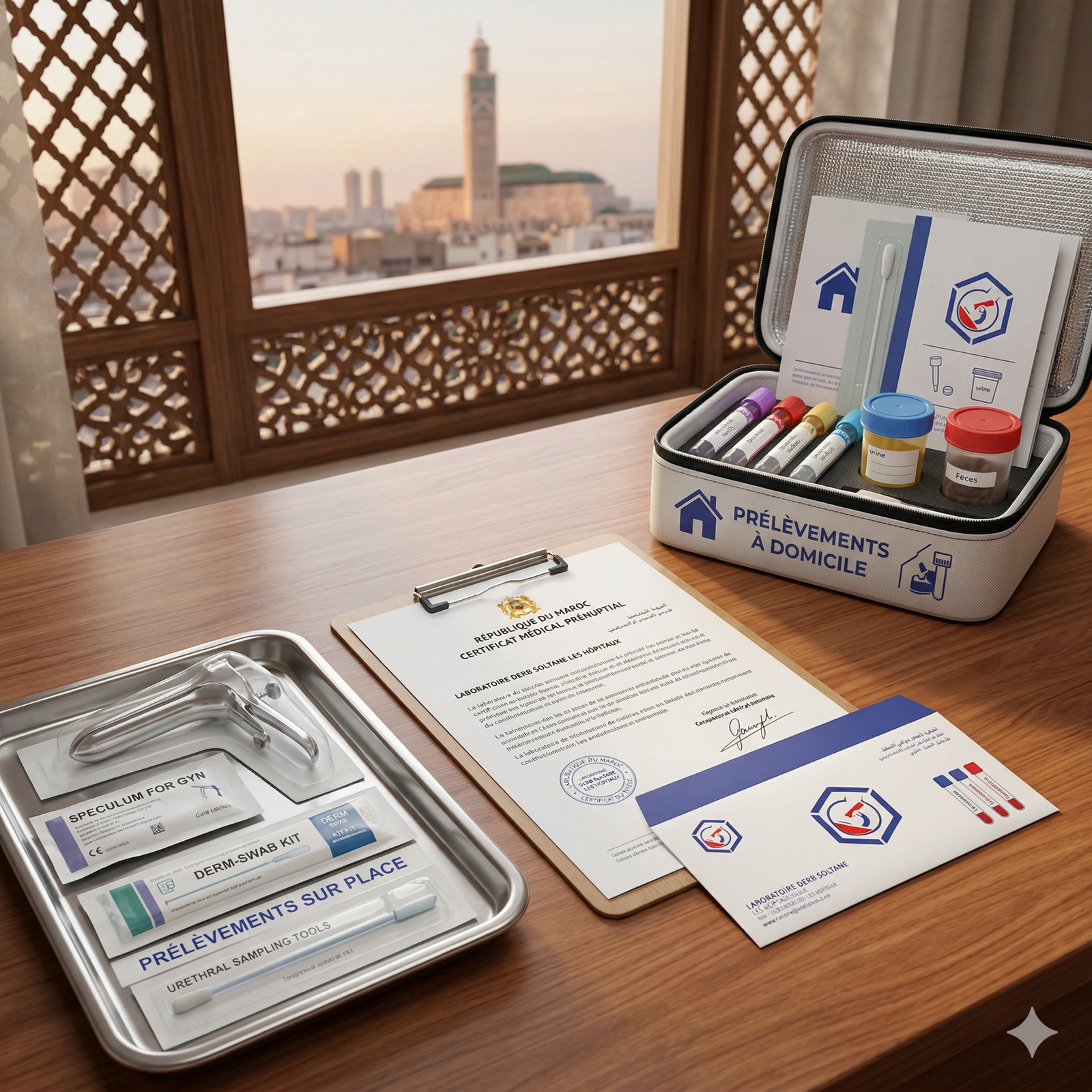
For example, if your workdays and wedding preparations leave you with no morning respite, inquire about the Home blood collection services. A qualified nurse can come to your home early in the morning to draw blood for both of you. You will then receive your results confidentially through an online patient portal, without having to travel again. A valuable time-saver as the holidays approach.
A passport to the future
A premarital blood test is much more than just a box to tick on the long list of wedding preparations in Morocco. It’s an act of responsibility, love, and mutual respect. By taking the time to have these tests done carefully, you offer your partner and your future family the greatest wedding gift: peace of mind and good health.